EUROPEAN PLASTICS NEWS
Published: November 12, 2014 8:53 am ET
Updated: November 12, 2014 8:59 am ET
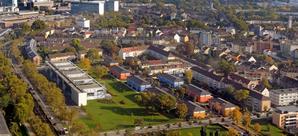
Image By: BASF SE
The Brunck Quarter in Ludwigshafen, Germany.
There have been positive long-term economic and environmental benefits from an energy modernization project in houses at BASF SE’s home base in Ludwigshafen, Germany, according to a study.
The Brunck Quarter in Ludwigshafen was built by BASF in the 1930s as a housing settlement for workers and was rebuilt in the 1950s following war damage. In a joint development with local government, which started in 1996, these 1950s houses were further modernized.
In 2001, Luwoge, BASF’s building subsidiary, launched its 3-liter house project to update a building from the 1950s so that it consumed only 3 liters of heating oil per square meter per year. Retrofit measures included thermal insulation with BASF’s Neopor expanded polystyrene material. BASF’s long-term project has also involved 5- and 7-liter houses, and most ambitiously a new-build 1-liter house.
A holistic study, which BASF said is the first of its kind, assessed the condition of buildings around 10 years after the renovation work, the level of heating energy consumption and an ecological assessment, as well as the wellbeing of the residents.
The study showed the external thermal insulation composite system (ETICS) comprising Neopor “still functioned perfectly after more than 10 years of use,” said BASF.
An economic viability calculation was prepared by Luwoge Consult, based on the prices and performance capability of the material at the time of the renovation work. “Using the example of the 5-liter house in the new building development in the Brunck Quarter, the payback periods for the different insulation measures in the area of the basement ceiling and the outer wall were just five to seven years, compared to 15 to 30 years in a newly constructed 1-liter house,” said BASF.
The comparison between the planned thermal heat demand of the 3, 5 and 7-liter houses and the actual average consumption figures over the years was “positive overall,” said BASF.
In the study, an extrapolation for reduction of CO2 for the entire Brunck Quarter showed CO2 savings were between 70 percent and 86 percent across the different building standards.
“In relation to the Brunck Quarter as a whole, around 8,300 metric tons of CO2 has been saved over the last 10 years,” said BASF.
Neopor has a positive life cycle assessment, it said. “The grey energy — in other words the energy used for production, logistics and disposal — was compensated for after just about a year by the savings on energy used for heating resulting from the different insulation measures.”
The response of residents was also assessed in the study. A total of 187 residents of the Brunck Quarter and tenants in a comparable modernized residential quarter in Darmstadt were surveyed. Around 80 percent said they were satisfied with the quality of the climate in their homes following the energy-related modernization and only 7 percent felt uncomfortable.
| 


